Wednesday, November 16, 2016

Wall Street Journal remains impartial in post-election coverage

By: Shelby Dermer

sd647212@ohio.edu

James Poniewozik asked the question : will the media be better in 2020? Worse?

She answered her own question by saying, "Yes. And yes. And there will be more of it."

Nine days have passed since Donald J. Trump turned from real estate mogul into the President-elect. After over a year of daily media surrounding the election everywhere you look, the United States made the choice as Trump beat Democratic nominee Hillary Clinton by gaining 292 of the Electoral College votes to become the 45th President of the United States.

The media had a lot to do with the election. Of course, Trump was claiming since day one that the mainstream media was against him. Which could be the reason why his victory over Clinton drew similarities to Harry S. Truman's upset over Thomas E. Dewey in the 1948 election.

Many gave Clinton a big lead (sometimes double digits) over Trump in key swing states like Florida, Ohio, Michigan, Pennsylvania, and Nevada. However, the votes told a different story on November 8th.
A CBS poll in late October gave Clinton a four-point edge in Ohio.
Trump would end up winning the Buckeye State by nearly nine
percentage points. (Photo: 10tv.com)

I covered early in the semester that the Wall Street Journal did a great job at being unbiased. And that if I was an undecided voter, I would turn to WSJ for my coverage of the race because it was not biased towards a particular candidate.

That remains true.

In post-election coverage, WSJ has maintained its solid journalism work. Topics on the site this week include pieces about Trump's son-in-law possibly having an important job in the White House to John Kerry claiming the President-elect will not take climate change seriously.

What I found most interesting from the readings was Margaret Sullivan's editorial on the Washington Post The media didn't want to believe Trump could win. So they looked the other way. 

Sullivan credited "magical thinking" for allowing the media to disregard Trump's enormous crowds when they went to the voting booth. Also, the liberal media didn't take the "coal miners or unemployed autoworkers" seriously.

Trump drew great support from coal workers across the nation.
Especially after Clinton's comments that she would "put a lot
of coal miners and coal companies out of business."
Photo: eenews.net


Sullivan absolutely hit a home run with this. And many non-professional journalists, like myself, did the same exact thing. We kept checking our favorite publications and fed off the news that Clinton had a comfortable lead and would find herself delivering a late-night celebratory speech to her supporters that Tuesday.

The media gave Trump the spotlight. From when he first stood behind the podium at Trump Tower and announced his intent to run for the position to when he took the stage in the wee morning hours of November 9th.

Sullivan points out that the media didn't create Trump. But I feel the constant exposure gave him more of a base to claim how rigged journalists were. Calling them out on Twitter and pointing them out during his rallies all took its toll.

Media outlets didn't give Trump much of a chance against the more-experienced candidate. But, as usual, the Wall Street Journal gave both sides. James Taranto wrote a great piece just one week before the election, going in great detail on how Trump could come out victorious. How right he was.

If the election taught us anything, it's the enormous impact the media has in politics. But, I have to give credit where credit is due. WSJ remained fair throughout the process of electing the next President.

Buckle in for 2020, people.

Thursday, September 22, 2016

How We Illegitimize Our Democracy


Leander Edmiston | le930612@ohio.edu

Last Friday the Commission of Presidential Debates (CPD) announced that Dr Jill Stein of the Green Party and Gary Johnson of the Libertarian Party would not compete alongside the two major candidates, Donald Trump and Hillary Clinton, who have set records as the most unpopular major party candidates in recent history. Since last Friday the media has twisted its coverage of third-party candidates as legitimate competitors to what they are now calling “spoiler candidates.”
Brynn Anderson | AP Photo

Ralph Nader, the four time presidential candidate, recently said in an interview that “the idea of calling a third party ‘spoiler,’ using the First Amendment right to run for office, is a politically bigoted word and should never be tolerated by the American people, because everyone has an equal right to run for office.” Nader, who has been called a spoiler himself after allegedly tipping the scales in Former President George W. Bush’s favor, when he received 97,000 votes in Florida in the 2000 presidential race, says that this process is a form of scapegoating. “Here’s how it goes,” Nader, says. “300,000 registered Democrats in 2000 in Florida voted for Bush—blame the Greens. Thousands of people were misidentified as ex-felons by Katherine Harris, the secretary of state for Jeb Bush, governor of Florida—blame the Greens. Scalia’s political 5-4 decision, which blocked the Florida Supreme Court’s full recount in Florida—blame the Greens. The Electoral College took the victory in the popular vote from Gore—blame the Greens … it’s total scapegoating.”

Stein, in a recent press release called on her supporters to protest outside of Hofstra University next Monday, the location of this years presidential debates. In 2012, Stein and her running mate, Cheri Honkala, were arrested for attempting to enter the presidential debates in a similar fashion. Here is a transcript of her remarks in 2012, moments before her arrest. “We’re here to stand ground for the American people, who have been systematically locked out of these debates for decades by the Commission on Presidential Debates. We think that this commission is entirely illegitimate; that if—if democracy truly prevailed, there would be no such commission, that the debates would still be run by the League of Women Voters, that the debates would be open.”

This years presidential debate is predicted to attract millions of viewers, and be the most viewed presidential debate in history. However, to participate in these debates the CPD requires that all candidates hold a 15 percent rating in five national polls, which are selected by the CPD chairman Frank J. Fahrenkopf, Jr.. But using polling numbers creates a cyclical problem, because polls are linked to name recognition, and the most significant opportunity in history is just out of their reach because they don’t already have significant name recognition. And the media isn’t helping, as I previously reported here.
A recent USA today found that 76 percent of voters want a four party presidential debate, but the CPD, which has publicly supported a two-party system (as I previously reported here) continues to create artificial barriers, like the 15 percent polling qualification, that bar candidates like Stein and Johnson, and prevent them from having a legitimate campaign. Because what could be more illegitimizing than a democracy pulling you aside and asking you to “please, shut up.”

Gary Johnson is on the ballot in all 50 states, and Jill Stein follows closely behind with her name on ballots in 45 states.  The CPD officially requires that candidates appear on enough ballots to have a mathematical chance of winning a majority vote in the Electoral College. However, the 15 percent barrier dilutes this rule's significance and continues to bar third-party candidates. Balloting should be the precedent the CPD follows to determine whether candidates participate in our democracy, or not.  

The Washington Post: Balanced Coverage at Last

By: Zahara Pruitt
zaharapruitt@aol.com

This week, I saw the tides turn within coverage at The Washington Post. They focused less on the horserace coverage of the presidential election and as a result, more meaningful coverage came about. I saw more articles concerning the presidential nominees policies and more issue coverage than I have seen in my time analyzing the Washington Post's political coverage. 

Photo courtesy of The Washington Post
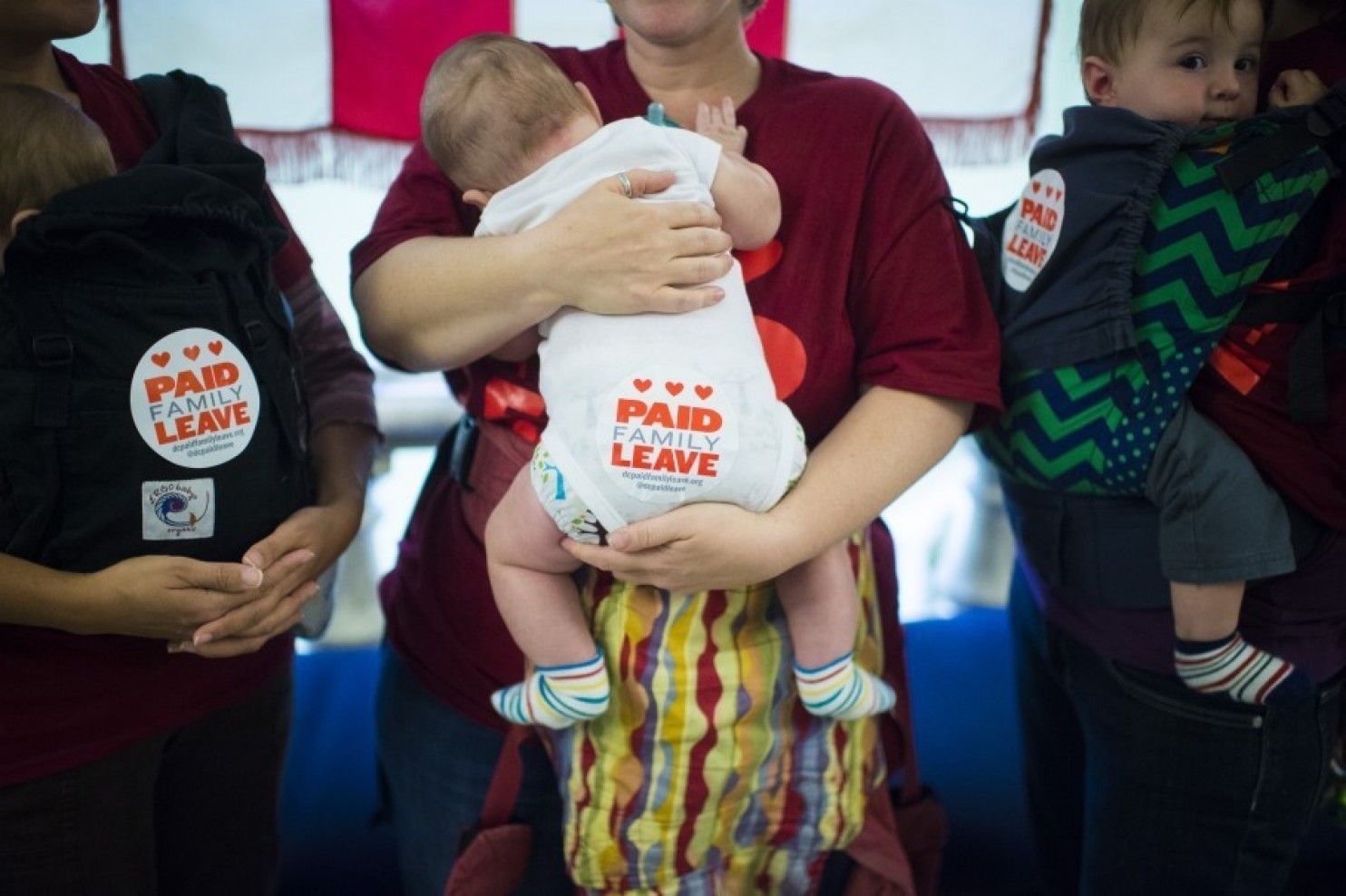
The Washington Post did a very interesting and informative piece on paid family leave, after Donald Trump's announcement that he supports paid family leave for women. This particular article not only mentioned Trump's announcement, but also provided a lot of context so that readers would understand the importance of this. 

The article mentioned how Trump and Clinton's plans differ, how momentous this was seeing as it's the first time that both major presidential candidates have released plans in support of paid family leave and the history of U.S. family leave policy. Fun fact: America is one of eight nations that doesn't guarantee paid family leave at the national level and is the only industrialized nation on that list. I learned this by reading the Washington Post article. This is an important fact that I believe voters should know and the fact that this article was so clearly able to lay out the main points in both plans and provide context behind that is a great thing. This is the type of journalism that I wish I had seen in coverage throughout the campaign.

The Post also offered an interesting piece on the how polls and single forecasts can lead to incorrect judgements. It talks about how each single forecast inevitably has some level of bias and certain limitations

The article also discusses the method that the Washington Post uses when trying to determine the current climate of the nation in regards to which nominee will be elected come November. I thought this was very interesting to read because it is still somewhat rare to get an inside look into the inner workings of publications. The Post uses a combination of six different combinations when analyzing how the nation feels. And they have determined that Hillary Clinton has been the front-runner from  the beginning. 
Photo courtesy of The Washington Post
The Washington Post also posted a 2016 Election Fact Checker that is extremely in-depth and very user-friendly. 

The fact-checker uses a "Pinocchio Scale" to rate the two candidates and their honesty. I love this! I thought this interactive article provides a good example of ways that traditional print publications can combine their investigative journalism expertise and multimedia to provide readers with tools and content that allow them to analyze and interpret information for themselves.  

Another important thing to note about this week's coverage is that the political page in the website was not solely focused on the presidential race. This was a first. More coverage was given to the house, the European Union and an article was even posted about third-party candidate Gary Johnson. I don't know if the two candidates were not as headline worthy this week or what attributes to this, but I found it to be an interesting shift and important to note. We will see if the Post continues this trend or not as the weeks follow. 

Trump Show Support for "Stop and Frisk"

Stephen Olson
so070712@ohio.edu

                                                             Trump's Inner City Solution

            Whether or not you admire Donald Trump and his supporters you have to admire Trump supporters for being so persistent, even when at times it seems factual that Trump is trying to blow the election. Saying that a “stop and frisk” policy would “worked incredibly well” is more than offensive to just democrats, it offensive to our Constitution and nation’s people as a whole. A stop and frisk policy completely clashes with our First Amendment rights of every citizen and is eerily communistic like in principle.

            Trump openly stated his support for the concept of a stop and frisk tactic to stop violence in black communities on Wednesday night in a mostly black church in Cleveland. “I think you have to [do it],” Trump said. “We did it in New York, it worked incredibly well and you have to be proactive.”

            The reality is that if you performed stop and frisks in every city you would find illegal activity on every kind of person. Not only will black communities be outraged if this strategy were to be implemented, America as a whole will be. This will cause our police to lose support and pay the ultimate price for our coward politicians, ultimately leading our nation in the path of Anarchy. If there is no trust between the people and the police, anarchy will emerge.

            Trump may claim that the stop and frisk policy was effective, but Trump failed to mention the negatives of the programs past. Interestingly enough the stop and frisk policy was originally implemented by now outspoken Clinton supporter and former New York City Mayor Michael Bloomberg. This lead to the June 17, 2012 march of several thousand down Manhattan’s Fifth Avenue. The protestors arrived directly at Mayor Bloomberg’s Upper East Side townhouse demanding that an end be put to the program altogether.

            The policing method reached an all-time high tension in 2012 when stop-question-and-frisk protestors who videotaped police stops became the targets of the New York City police. A wanted style posted hung in precinct headquarters, without any allegation of criminal wrongdoing. The police labeled the protestors as “professional agitators” and brought national spotlight to the issue.

            The United States Supreme Court found that in the case of Terry v Ohio that about 684,000 people were stopped in 2011. The court found the NYPD guilty of violating both the Fourteenth Amendment, which prohibits racially discriminatory policing, and the Fourth Amendment, which prohibits unreasonable searches and seizures.


Columbus off political radar in Ohio

Christine Holmes | ch850016@ohio.edu

Ohio may be a crucial state for presidential candidates to win, but its capital doesn't get much attention from the nominees. This season, so far, the candidates have spent most their time in the northeastern part of the state when visiting. This leaves local Columbus TV station, WCMH, in a tough spot for generating its own political content.

Logo from WCMH Twitter account
After a search of the station's website, it was obvious that it relies heavily on Associated Press wire material to inform its viewing/reading area on topics related to the 2016 election. The prominence of having a candidate within reporting proximity doesn't occur often, so the station probably focuses its efforts on other issues.

For a city with over 800,000 residents in a swing state, it's necessary to inform those eligible to vote on as much as possible.

Mirroring national media outlets, NBC4 provides minimal coverage on the third party candidates. Maybe it's irony, but the first article that appears on the station's website is about the third party candidates being excluded from the first presidential debate. That article, and all other stories, come strictly from the AP wire.

NBC4 isn't at fault for the lack of coverage, but that doesn't mean they can't be a part of the solution to change the way America covers politics. If Americans see a problem with the two-party system, which is becoming a topic of debate even more so with this particular election, then it is the job of journalists to investigate and find answers. Leaving it to a government that's comfortable with the way it functions, and will likely be resistant to change, is not wise. That's why journalists exist- to question authority and keep power in check.

When Green party candidate, Jill Stein was in Columbus for a rally at Capital University, WCMH ran a story on its website from the AP in Columbus. Even worse, the AP story referenced material from the Columbus Dispatch. The story didn't cover much of what Stein had to say, but rather it focused on her punctuality as she was late for her speech after flying to the wrong city.

The few stories about Gary Johnson also paint the candidate in a negative light. While it is important to tell the public about Johnson's perceived lack of knowledge on Aleppo and Stein's bizarre mishap in flight, it's just as important to provide more coverage so voters have whole judgement.

Many of the stories produced on NBC4's website criticize the candidates, which is a duty of journalists, but they lack in the coverage that shows the candidates doing anything positive. That's an obvious bias that needs to be addressed.

While it's instinctive for journalists to criticize, question, and keep the future of the country in line, it's also crucial to not let emotions take over. Objectivity must always come first, so when a story that appears to be a PR delight comes out, it should also be covered as equally as the PR nightmare. It's only fair to the candidates and the voters to have this kind of balance in coverage.


The BBC attempting to maintain balance

By Derek Smith
ds599012@ohio.edu

By the nature of the organization, the BBC will not often prioritize election coverage over other national or international events of importance. This week, due to third fatal police shooting of a black man, coverage has shifted from the election to these deaths and what has unfolded because of them.

Making its way to the front page the BBC website, these deaths and the discovery of facts in the days to come are sure to drive stories hopefully for some time.
   
In the US political section Trump again held a majority of the coverage, most of it negative. Despite Trump’s attempt to seem more moderate in the public eye, the BBC tends to subtly remind the reader of what Trump has said in the past. Clinton seemed to get a surprising amount of positive coverage as another prominent Republican figure has seemingly endorsed her.
 
An interesting piece comparing world leaders to Trump and Clinton — and at times Trump to his past self — both seemed to praise Clinton’s stances, while comparing Trump to many ill received world leaders. While the moderate Trump has a dignified look about him, past Trump a face of pure smug. Some of the more damaging comparisons were to Rodrigo Durante of the Philippines, and to what he has said in the past, versus the moderate shift he’s had.
Trump's ties with Putin have been different from others.
Photo via Wikipedia.
 
This piece had a two-fold attack on Trump, first he drew criticism on his complete turn around in some policy issues, and second he’s compared to some of the world’s most negatively perceived leaders such as Rodrigo Duterte of the Philippines, famous for his hardline approach to crime and drug use.
 
In the same article Clinton is compared to politicians like Germany’s Angela Merkel, or Norway’s Erna Solberg. While Clinton is usually the lesser of the comparison, she is still gains a great deal of positive coverage in this article, and others written in the last few weeks.
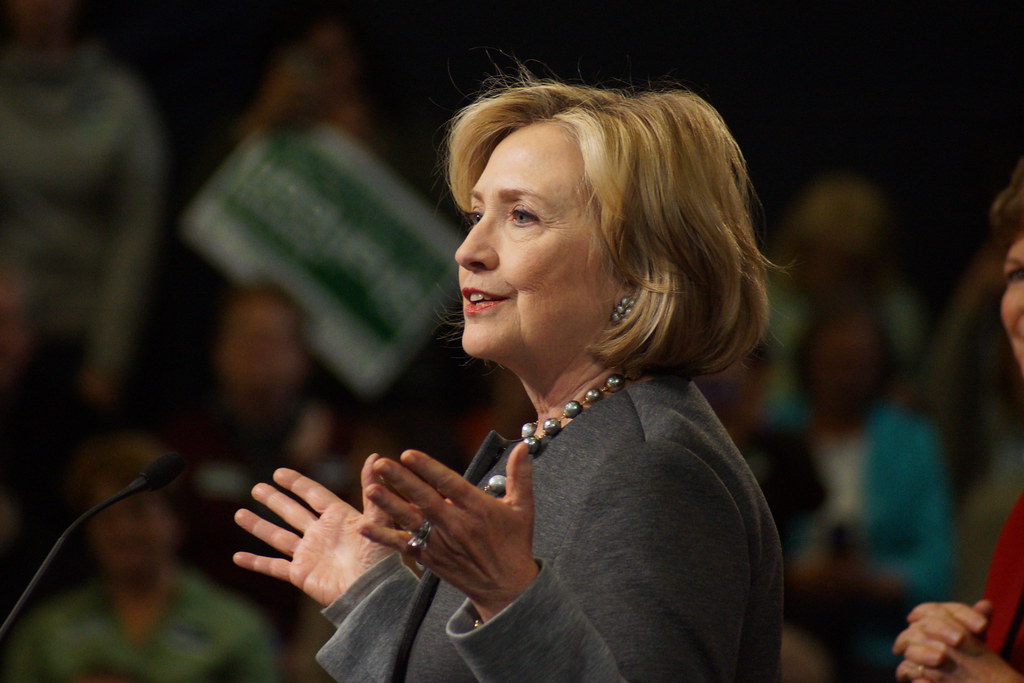
Hillary Clinton speaking at an event.
Credit Marc Nozell Flickr.
   
While the BBC does it’s best to hide bias, there is a clear slant toward one candidate. Clinton’s coverage rarely seems scrutinized the same way as her opponents. Too often the BBC falls victim to the same pitfalls that other large news outlets fall victim. Too often they provide large scale coverage to frivolous news like celebrity breakups, best left to the entertainment gossip sites.

The BBC does a better job than many outlets, providing coverage to events in Africa and the Middle East unlike that of their American counterparts. Their front page today has coverage devoted to the Syrian War. While one yields to the fluffy happy news, it still brings up an important issue with refugees from the war. They often question issues globally deeper than many American outlets, having an outside perspective. While they try their best at balance they’re guilty of providing too much coverage on scandals rather than the issues.

It’s an effective method to bring in web traffic, but by the standards the BBC sets for itself, their coverage of the US election isn’t entirely different from American coverage, usually coming out at a different time due to the time zone.

What Happens on TV Stays on Social Media

By Tyler Prich
tp536712@ohio.edu

There is an electric air of anticipation for this year's presidential debates - the number of viewers has been increasing since Kennedy, and this one is expected to break records. Maybe it's because there's an element of drama and unpredictability with these candidates, or maybe the public is just more interested in politics; whatever the case may be, there will be millions of other debates happening simultaneously on social media.

A Historic Shift

Social media will be playing an unprecedented role in who "wins" this years debates. Four years ago the Romney-Obama debates saw 11.1 million comments on social media - numbers only surpassed by prime time events such as the Grammy's and the Super Bowl. The comments were analyzed and overwhelmingly picked Romney as the winner, even though he didn't do as well in the general election.

Clinton and Trump will face off for the first time on September 26.
Source: http://www.oregonlive.com/
This time around, social media has continued it's exponential growth. Those comments should be expected to increase even more with the amount of social networks involved - such as Snapchat offering viewers an inside look to each debate. This election cycle has already seen an unprecedented an unprecedented amount of campaigning on social media, but how exactly will that impact be felt during the debate?

What to Expect

Traditional media has become infamous for playing out-of-context soundbites that the talking heads will analyze and dissect weeks after the event; however, we see this even more in digital social media. Nowadays, it's so easy to take a clip of either a shining moment of a candidate, or a huge slip-up, and post it - allowing for commentary to go on until election day. For some people, this will be their only coverage of the debate, seeing the boiled-down "highlights" which present a skewed view of a several hour affair.

For the first time ever, social media is being used to influence the conversation that the candidates will have on stage. Companies like Facebook and Google will be providing analytics information to the moderators on what issues the public is talking about. Facebook is also acting as the "exclusive media sponsor" for the event, and will create interest in the event by using Facebook Live to stream some off-camera footage of the debate. The second debate will also be the first time ever that social media will be used to gather questions from users to ask a candidate during the general debates; it's been used before in primaries.

Gag Order?

So since social media is going to play such a massive role in these debates, what have the candidates had to say about the upcoming debates? Very little actually. While many users are voicing their opinions on some vague topics of discussion in preparation for the debate, the candidates have remained largely silent on the upcoming debate.

We can assume that Hillary is already preparing her very strategic approach to the debate, and Trump must be doing some sort of preparation. What we don't know is will the campaigns utilize their own social media accounts during the debate. We've seen from Clinton and Trump that this campaign takes place live at all times, and the debate will serve as a second medium for the candidates to get their point across and continue the conversation.