Thursday, September 1, 2016

NYTimes.com: Is Experience Enough, or is it More Important to be Gracious?

Micaela Marshall
mm392413@ohio.edu

A basic "requirement" to be the next POTUS has been challenged this election. The requirement I am referring to is political experience.

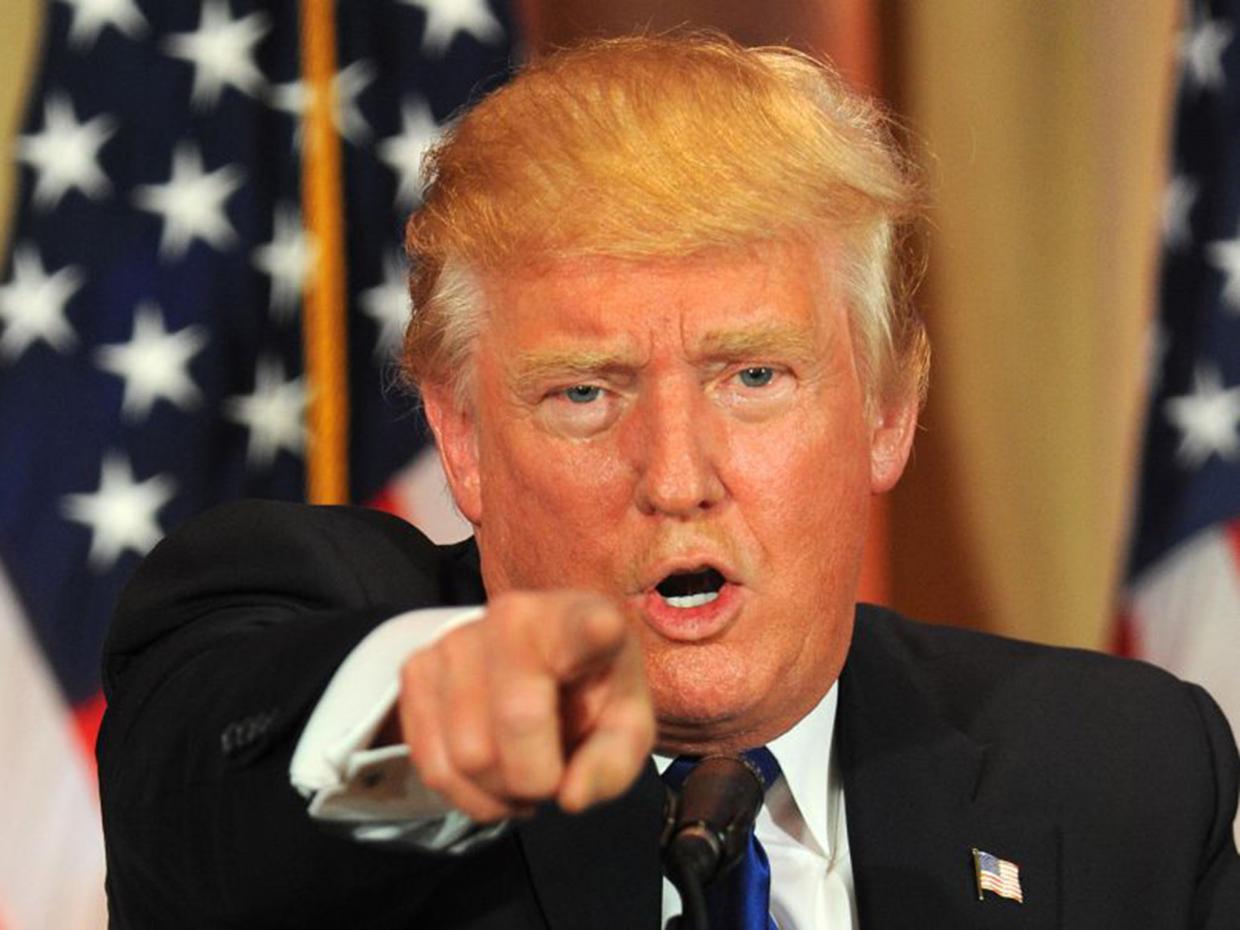
If someone were to look at Donald Trump's resumé they would find that he became an American phenomenon by earning his billions in the business world as a New York real estate developer and from his reality TV show: "The Apprentice." The 2016 Republican nominee has no prior political experience.
Source: http://www.nettbladet.com/selvutvikling/informativt-realitytv.html
Source: http://communityjournal.net

But, does that matter?

Some voters are actually drawn to Trump because he lacks experience. They believe he can provide a voice that matches more of what the people actually want, instead of what a politician says the people should want. In some cases, political experience and political corruption go hand-and-hand. Which leads me to the other presidential candidate: Hillary Clinton.

Clinton has been in the public eye as a Democratic political figure for decades. Her experience stems from her time serving as a New York Senator, the first lady of the U.S., and she most recently served as the secretary of state under the Obama administration.

The Art of...
A New York Times Op-Ed columnist, David Brooks, wrote a piece he titled: The Art of Gracious Leadership.

In the article he discusses the idea that it is not enough to be experienced to win this election--the public only trusts people who "turn experience into graciousness."

Brooks uses examples of gracious leaders such as "Lincoln, Gandhi, Mandela, and Dorothy Day" to claim that Clinton is not one; she never confronts her scandals in a straightforward manner. She sidesteps situations, withholds information, never admits the truth, and refuses to ever come clean.

Her experience doesn't seem to be enough for some people to believe her and give her their vote. She is making the decision to be a leader that values control over trusting the public. Brooks concludes his piece with "It's never too late to learn from experience."

Reader's reactions were emotional.

There were few Trump supporters that made their opinions known in the hundreds of comments. This could mean that only those who disagreed with Brooks felt compelled to voice their opinion. But it could also mean that those who loyally support Clinton do so in spite of her flawed character. Many of her supporters that commented agreed she has made many mistakes. They argue that her experience makes up for it.

#ImWithHer supporters defended her, claiming the column was sexist. Some stated that she needs to be tough in order to survive as a woman in politics, and that "grace" has never been a requirement to be president.

NYmag.com writer, Dayna Evans, wrote a sarcastic spoof in response to the column that she titled: The Art of Writing About a Female Presidential Candidate.

Evans disagrees with Brooks entirely. She criticizes Brooks using the exact same language he used in his article to discuss Clinton.

Fewer readers left comments on this piece, but almost all of those who did defended Brooks.

One stated that the idea that we must be "gracious" when writing about female presidential candidates is sexist because they "deserve the same amount of scrutiny that any other presidential candidate deserves."

Regardless of the viewpoint, both articles are getting the public worked up and angry; just like this election has been impacting Americans from the start. It is still unclear what matters most to the voters: experience or grace. I suppose we will all find out in November.

CNN's General Election Coverage Strengths and Weaknesses


Justin Holbrock
jholbrock2@gmail.com

In a presidential election year, September means the start of full-fledged media coverage of the two presidential candidates and everything their campaigns entail.

This is especially true for one of the world’s biggest and most well-known media companies ­— CNN. 

One of CNN’s main areas of focus over the past week has been covering Donald Trump’s recent commitment to improve his standing with minority voters.


These two tweets were taken as screenshots from Donald Trump’s Twitter page. His controversial tweet on top was followed the next day by the tweet on bottom. Photo credit: Donald Trump Twitter page.
On this front, CNN has done a thorough job both online and on television to show the many ways in which Trump has tried to appeal to minorities, especially African Americans and Hispanics. The company also included the extent to which he'll go to get their votes.

From CNN’s coverage over this past week, I’ve been impressed with its ability to stay focused on one area, which in this case was Trump’s search for minority votes.

I also commend the company for having an equal commitment to both digital and television coverage and not letting one medium dominate over the other.

Here’s the Problem

After watching Trump’s joint statement with Mexican President Enrique Peña Nieto and CNN’s coverage of the event on Wednesday afternoon, one thing became abundantly clear: CNN’s television coverage of breaking news contains the same material and format regardless of what program is on and which host is on camera.

The network went from the live event back to Jake Tapper on The Lead where he began to interview a slew of guests asking for their opinion on what just happened.

Immediately following the show, The Situation Room with Wolf Blitzer came on and he proceeded to do the exact same thing.

Trump shakes hands with Mexican President Peña Nieto after their joint statement at the Los Pinos presidential residence in Mexico City. Photo credit: Dario Lopez-Mills/AP
Later that night after Trump’s speech in Phoenix, Arizona, anchor Don Lemon came on CNN Tonight and his first sentence was followed by an introduction of six different guests who all gave their take on Trump’s speech.

And that’s the problem with CNN’s current model for covering breaking news.

After mentioning what the news is, the network and its shows introduce so many guests with so many varying opinions that the people who come on get drowned out.

Their words get lost in translation not because they’re being interrupted, but because the sheer number of guests makes it hard to remember who these people are and what they had to say.

Another issue CNN has is giving Trump too much coverage. The company then exacerbates the problem by simply including a quote from Hillary Clinton responding to something Trump said, which CNN attempts to pass off as coverage of the Democratic nominee.  

Solution

Moving forward, CNN needs to cut back on the number of guests and correspondents that it has on its shows when talking about either candidate. There are just too many guests with an overwhelming amount of opinions that the broadcast becomes too hard to watch.

A second area of focus for CNN needs to the amount of coverage it gives to Trump and Clinton. 

This is about unfairly covering one candidate more than the other. But more than that it's a chance for CNN to prove it can show restraint by not covering everything Trump does.

His plan is to make as many headlines as possible to garner more coverage. By not going after every news story involving Trump, CNN shifts to a more balanced coverage while also putting journalism before viewership numbers.


Wednesday, August 31, 2016

Trump seeks to make platform approachable

Derek Smith
ds599012@ohio.edu

In 2008 Mitt Romney had a problem with the media, while their relationship wasn't volatile like they are currently with Donald Trump, Romney's public image alienated himself from the electorate. With the election drawing near current polls are showing a grim day for the Republican candidate once again.

Romney's issues were tied to his personality, and his inability to shed his elitist image. From his comment about the 47 percent, and having binders full of women, Romney seemed to hand material for his opponents to label him out of touch. Now four years later Donald Trump is having his own branding issue for different reasons.

The way Trump attacks is vicious, more so than that of many political candidates of the past. His attacks go straight for the throat in a way only a former reality star and business mogul can. While his ferocity cannot be denied, his aggressive nature has put him in several tight spots during the election. Often leaving him open for hostile media coverage.

In his interview with the Washington Post regarding the treatment he receives from the media Trump said, "The media has a tremendous bias and has for a very long time against the Republican party and against somebody that happens to be conservative. They certainly have a tremendous bias against me." 

Late night twitter tirades, feuds with Gold Star families, babies, and journalists have all contributed in some form to the waning support for Trump. His aggressive tactics and lack of "political correctness" won him enough voters securing the nomination from those within the GOP's ranks. Furthermore his style ended up beating some of his opponents into supporters notably former rivals Chris Christie and Ben Carson.

Trump's forceful nature was a key force in securing the nomination.
Photo from independent.co.uk
However, it's also garnered fierce opposition, the most worrying for Trump is the discontent within the Republican's own blood. One of the most striking moments at the RNC this summer was the public refusal by Ted Cruz to endorse the chosen candidate. While Cruz's popularity among the party faithful is wanting, his popularity among conservative christian voting base is noticeable. Another powerful opponent is John Kasich, as the governor of Ohio his endorsement means a great deal to Trump as he seeks the presidency. 

While Kasich still has time to endorse his former rival, he still sat out the convention despite it being in his own state. To add to Trump's woes Kasich's reported denying Trump when offered the Vice Presidency does not bode well. 

In recent weeks it's clear Trump is trying to pivot to a more central stance with mixed results, with he trip to Mexico it seemed likely Trump would have to confront his wall claims, a very important issue to his power base. However the statements he made in Mexico were tame as he said, "We recognize and respect the right of either country to build a physical barrier or wall on any of its borders." While softening his stance may help him win over voters, it could also lose him the base that got him to the nomination. However, hours later in Arizona he would return to his original stance.

Trump's strategy has left him in a worse situation than that of Romney in 2012. The party is fractured, the media will not relent, and public blunders are forcing away potential allies in the months to come. He realizes that he needs to reign himself in now that he has the nomination, but his previous stances are making it difficult to pivot to the center. However, nothing is set in stone until the election results are in.

Trump keys in on immigration, Clinton on unfavorable rating

By: Shelby Dermer
sd647212@ohio.edu

With a little over two months remaining until election day and the first presidential debate scheduled for September 26th in Hempstead, NY, both candidates are trying to strengthen their campaigns as the clock continues to tick.

Republican nominee Donald Trump is planning a trip to Mexico to visit President Enrique Pena Nieto this week before a scheduled speech on immigration in Phoenix on Wednesday as reported by the Wall Street Journal.

Ever since Trump stood at Trump Towers in New York and announced his campaign for the presidency in June 2015, his stance on immigration has been perhaps the most important and controversial part of his bid for the White House.

The real-estate mogul made a bold agenda for what he would do to solve America's illegal immigration issue, proposing a large wall on the U.S-Mexico border, paid for by Mexico, to keep immigrants from illegally entering the United States, as well as deporting 11 million immigrants already in the United States.

At first, it seemed like a far-fetch idea for a nominee that had little to no chance of being the republican nominee. However, as Trump's campaign built a full head of steam as he rumbled over fellow nominees like Jeb Bush, Marco Rubio, Ben Carson, John Kasich, and eventually Ted Cruz, the 70-year-old's plans on immigration were thrust into the spotlight.

Immigration was one of the main points made by Donald Trump when he announced his run for the presidency in June 2015 (Photo: NPR.org)

This meeting between Trump and Nieto has to come as a bit of a surprise to many after Mexico's President vowed that his country would not be paying for the wall to be built earlier this month.

But has Trump backed down on his firm stance on illegal immigration?

Once the backbone of his campaign, Trump recently said in a town hall interview with Sean Hannity, that he would be able to "work with" illegal immigrants, perhaps suggesting that he is pulling back from his original stance to deport illegals living in the U.S.

"Let me go a step further- they'll pay back-taxes, they have to pay taxes, there's no amnesty, as such, there's no amnesty, but we work with them," Trump said to Hannity.

Although Trump stated that he is not "flip-flopping" on his immigration stance, it seems this meeting with President Nieto will hold a lot of importance for the Republican nominee as to whether he plans on a massive deportation of illegals or if he was just feeding to the massive crowds that have welcomed him in hopes of winning the party's nomination.

Meanwhile, Democratic nominee Hillary Clinton is working to better her image after the Wall Street Journal introduced a poll conducted by ABC News and the Washington Post which shows that her unfavorable rating has reached 59% among registered voters, nearly identical with Trump's unfavorable rating, which is up one percent from the previous edition of the same poll.

Clinton's unfavorable rating is the outcome of more drilling of her email scandal and the Clinton Foundation. The email scandal is out in the open, but many Democrats are pushing Clinton to cut ties with the Clinton Foundation that was founded by her husband, Bill, in 2001.

Democratic nominee Hillary Clinton is being encouraged to cut ties with the Clinton Foundation to help her unfavorable rating that has reached its highest point (photo: usapoliticstoday.com)

As reported by the Huffington Post, the New York Times editorial board is pushing Clinton to cut ties after "scrutiny in recent months following allegations of ethical impropriety surrounding her tenure as secretary of state," says Igor Bobic, Associate Politics Editor for the Huffington Post.

Last week, Trump called out Clinton to shut down the foundation entirely, and it may be a wise move for Clinton to cut ties if she wants to avoid another seven-percent increase in her unfavorable rating as the calendar switches to September.

The Wall Street Journal questions if Clinton's growing unfavorable rate will cause an increase or decrease in voter turnout in November.


The Newest Election Battlefield


Tyler Prich
tp536712@ohio.edu

The Digital Election

The 2016 Presidential Election is taking the race to an different battlefield - social media. While 2012 saw the emergence of presidential candidates onto social media, it didn't have quite the impact it has had on this election. According to a Pew Research Center study, more people have been receiving their election news from social media than ever before - around 44% of adults got their news from social media, greater than local and national newspapers. Therefore, these candidates must battle it out in the digital realm or risk losing the support of young adults.

The battle is fought minute-by-minute in front of the whole world. When Donald Trump tweets something outrageous, the whole world stops to check and wait for Hillary's response. Even while writing this blog, The Hillary Clinton account tweeted nine times reacting to and attacking Trump, following his visit to Mexico.

Utilizing the Newest Campaign Toolbox

Both candidates have very different approaches to utilizing social media. They now have access to a whole new range of tools to reach people- Twitter, Facebook, Snapchat, Periscope, the list goes on. While republican nominee Donald Trump tends to be sporadic with his social media posts, ranging from policy to personal threats, Hillary Clinton tends to approach it much more tactically. An quick look of her twitter will show that her team has very good handle on her brand and the campaign.

Image result for hillary clinton on phone
Clinton on her cell phone | Source: http://www.salon.com/
Clinton's biography alone gives the impression of someone who understands social from a PR standpoint: "Wife, mom, grandma, women+kids advocate, FLOTUS, Senator, SecState, hair icon, pantsuit afficonado, 2016 presidential candidate. Tweets from Hillary signed - H." It's concise, and makes use out of every character. It even acknowledges the fact that not all the tweets are from the nominee herself, but from her team. Clinton's tweets that have her signature tend to be more personal and have a more casual tone, but they are few and far between.

Hillary's account posts once or more per hour and often retweets content from outside sources, often about her policy. But a good portion of her content comes from controlled media from the Hillary campaign, which is a generally good strategy, as any social media professional will tell you. But as we've gotten closer to November, much of the content has shifted towards attacking her Republican opponent. This is to be expected in any presidential race, let alone one so heated. Hillary's timeline has become riddled with Trump attack ads, almost to the point that you have to sift through the clutter to read anything about the issues.

Attack, attack, attack

What could've been a warm-hearted medium to discuss issues, turned into a veritable flame war between two teams of tactical campaign experts who seek to constantly discredit the other. Social media has become the candidates platform of choice to make the other seem unfit for the job. Both sides must be ready to respond to news and jump on the opposition as fast as possible. Is this attack-first mentality the optimal strategy for Hillary? Maybe, maybe not. We know Trump will not hold back, his candidness and attack-first attitude on social makes him very popular on the internet. Hillary may just be a victim of the circumstances.


An Inside Look at MSNBC's Website: How Is Their Coverage Really Affecting the Election?


Jackie McCrea
jm059212@ohio.edu


A Look Inside

It is no secret that certain news and media outlets lean one way or the other, whether it be predominantly conservative or liberal. MSNBC leans heavily to the left.

 If anyone was unaware of the type of coverage they make available to the public, it is immediately apparent upon entry of their website. One can soon spy a Trump slam piece on every corner of the site, whether it be criticizing his foreign policy or critical analysis of the people who tend to support him. 

Of course, there are other news media outlets that would only display attacks on Clinton, but I can’t help but wonder if this type of news coverage is straying from the central message, being that Clinton is the candidate they have chosen to support. 

This week, I tried to analyze MSNBC’s website because, as we all know, internet has some of the highest traffic, especially regarding news coverage.

 Immediately, my vision was clouded with photos of Trump and headlines that seemed to drag him through the mud. For instance, the article entitled “We didn’t discuss who will pay for the wall.” Clearly, one can tell this will not be the most flattering article and will certainly criticize his foreign policy ideas. 

The article went on to say that during Trump's meeting with the Mexican president, neither discussed the funding of the infamous wall. Of course, there are many criticisms of the building of the wall so this article drew critics of the Republican nominee. 

Photo published for Donald Trump is about to meet the president of Mexico. Which of these tweets might they discuss?
MSNBC tends to use less than flattering photos of  the Republican nominee. This particular photo was courtesy of Hillary Clinton's Twitter which is commonly featured on the news site.

Clinton on Trump Mexico Trip: Diplomacy More Than a Photo-Op

Oddly enough, for being such a left-winged, pro-Hillary organization, I only found one article where her name actually appeared in the title on the home page. 

This was yet another article putting down her opponent. Here, Hillary discussed her expertise on foreign policy while claiming Trump is only into foreign relations for a "photo-op."

 So here comes my major question. A news organization that is clearly in favor of the Democratic candidate has but one article with Clinton's name in the title? And that still happens to be an attack article on the Republican nominee? 

I do realize that this election is almost at the end of the wire and that it is time to throw out all the stops. However, in my humble opinion, news organizations should be focused on what each candidate is doing to help strengthen their numbers and their platforms at this point.

 In a perfect world, the media would be unbiased, but it's not. So shouldn't media organizations that favor a candidate focus on building them up? Highlighting their goals and plans to encourage voters.

 How much influence does the news media have on painting a negative picture of a candidate? From what I've found, there are mostly only negative articles circulating about both candidates, which I have to say, is quite disappointing.


Tuesday, August 30, 2016

Zanesville NBC affiliate provides mediocre election coverage

By Christine Holmes | ch850016@ohio.edu

Voters in Muskingum County, Ohio may need to rely on election education from sources other than their local TV station, WHIZ based off the station's web coverage of a nearby rally stop.

When GOP vice presidential nominee Mike Pence visited the neighboring city of Cambridge on Aug.10, the NBC station located in Zanesville managed to provide just over 200 words summarizing the campaign stop at the Pritchard Laughlin Civic Center.

In the story, the reporter pulled just one quote from a speech she notes as being 30 minutes long.

GOP VP candidate Mike Pence addresses a crowd of
 rally goers in Cambridge, Ohio. | Photo Credit: WHIZ
The reporter cited Pence predicting economic growth should Donald Trump be elected president, but didn't expand in much detail on the quote or put it in context.

Such practices force readers and viewers to interpret the quote themselves, instead of the journalist doing the work and asking the questions for them.

The reporter attempts to clarify the statement in a following quote from a former state representative, but much of her effort is lost because she didn't identify the representative's political affiliation for readers to understand in whole.

The story leaves readers with the possibility for many questions, especially those regarding specific statistics stated within direct quotes.

This particular version of the story for web doesn't provide any research or attempts to localize the information to make it more pertinent to residents of Muskingum County.

Perhaps the story is better told in its broadcast form, but the version found online lacks detailed information for voters to use at the polls, putting them in a difficult position to make a fully educated decision.

Despite being a small market (204 out of 210, according to Neilsen's Television Market Universe Estimate for 2016) WHIZ  still reaches more than 31,500 homes and holds great responsibility for providing thorough election coverage for its viewing area.

This story reaches a much bigger audience than the greater Zanesville viewing area because it's online and therefore, has the potential to really tell the story of what those in southeastern Ohio think of the 2016 election.

Based off this local coverage of the presidential election, voters aren't left any more informed on the candidates than they would after reading the station's story previewing Pence's campaign stop.

The story would have benefitted readers more by describing more about the Trump supporters or protestors who showed up to the rally. It would have painted a better picture of what area voters think about the election and how they perceive the candidates.

Sometimes official opinions aren't the only ones needed for a story. Although necessary to set the tone of a story, the opinions from average residents may be valued more by local viewers and readers.

National outlets aren't necessarily going to take the man on the street coverage approach, so it's the duty of local journalists to be the voice for individuals who otherwise wouldn't have an outlet to express their opinions.

This story completely missed the opportunity for local opinions from, for example, small business owners, teachers, and everyday blue collar workers.

This post may seem overly critical of what is typically a springboard station for new journalists, but it's important for journalists at all levels, including students, to understand the role they play in the function of society.

During a presidential election it's especially important for reporters to provide full political coverage for their audiences. This particular story didn't quite do that.

The reporter did, however, do a good job of eliminating political bias in her choice of quotes used in the web article.

For example, she didn't take what Pence said as the absolute truth. She used another source to gain perspective from the democratic party's view, which is a good instinct for a journalist to have from the watchdog outlook on reporting.